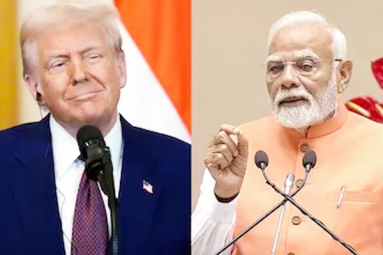

(Image source from: Bloomberg)
The US-India trade agreement, which President Trump announced around ten days ago, is still being adjusted before its expected signing in mid-March. The Trump administration quietly changed its fact sheet after details about pulses and a $500 billion purchase pledge differed from the official US-India joint statement, causing confusion and criticism. The White House is now apparently addressing these issues, suggesting that private discussions are continuing and India might receive more benefits. The fact sheet was revised within 24 hours of its initial release on Monday, reportedly after India's Narendra Modi government requested changes to terms the countries hadn't agreed upon. We will explain the important revisions made by the White House that give India a better negotiating position.
A significant change in the US trade deal fact sheet involves taxes on pulses. The first version of the fact sheet stated that India would lower or eliminate these taxes on some US pulses.
India plans to lower or remove taxes on all American manufactured items and many food and farm goods, such as dried distillers' grains (DDGs), red sorghum, tree nuts, fresh and canned fruit, soybean oil, wine, and spirits. However, a later version of the document no longer lists pulses. Importing farm products, especially pulses, is a sensitive topic for India's farmers and has been a firm boundary in trade discussions. India is also the world's biggest grower (producing around 25-28% of the global supply) and user of pulses.
It's worth noting that a few months ago, when trade talks were stuck, two US senators asked Trump to pressure India to drop a 30% import tax on US pulses. This tax, which started on November 1, was largely seen as a response to the severe 50% tariffs Trump put in place last year. But now, this tax has been cut to 18% as part of the trade agreement. The other significant alteration in the US document concerns India's intended purchases of goods from the US.
The prior text claimed India "committed" to buying $500 billion in American goods and services over five years. The updated text changes "committed" to "intend," a minor but important shift with big economic effects. The previous fact sheet stated, "India committed to buy more American products and purchase over $500 billion of US energy, information and communication technology, agricultural, coal, and other products." The new version also notably removes "agricultural goods."
Furthermore, another change in the US fact sheet concerned India's digital services tax (DST). The earlier version said India would "remove" these taxes, which caused confusion because India's official trade deal statement didn't mention removing any such tax. The White House has now taken this out of its most recent fact sheet. It now says, "India committed to negotiate a robust set of bilateral digital trade rules that address discriminatory or burdensome practices and other barriers to digital trade."
Companies can be taxed on the money they make from people in a country through their online services, even if they don't have an actual office there. It's important to note that India removed its 6% tax on online advertising services starting April 1, 2025.
In important trade deals like this, even minor alterations to the language are significant and can lead to political and financial outcomes. Here, the earlier White House document greatly exaggerated what India had agreed to in the trade deal. However, India isn't one to stay silent. With the corrections now made to the US document, the official stance on the trade agreement is clear: India didn't promise the US anything about pulses, and there's no mandatory requirement to buy $500 billion worth of goods. Still, both countries haven't yet addressed a major point brought up by Trump – India's promise to stop buying Russian oil. This is expected to be clarified soon. We will inform you first.