
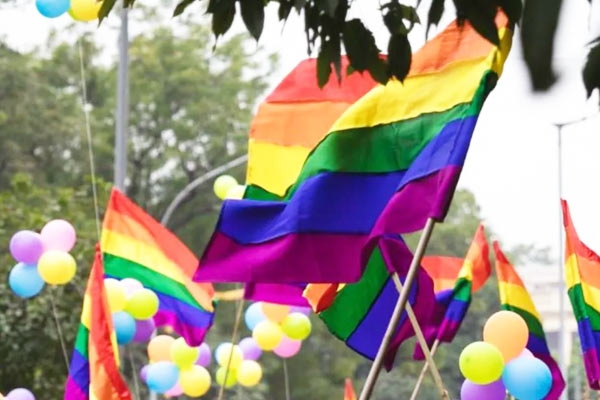
(Image source from: News18.com)
Curiosity, lack of commitment, and adaptability—these terms capture the essence of today's relationships effectively. They also suit the idea of heteroflexibility, a noteworthy sexual identity gaining attention these days. The idea of sexual orientation began to form in the late 1800s. Karl Heinrich Ulrichs, a German legal figure and writer, advocated for the rights of homosexual individuals in 1867. Prior to this, society mainly recognized only heterosexuality (men attracted to women, women attracted to men) as the only sexual orientation. Thus, the concept of a male/female gender distinction was widely accepted. As time passed and LGBTQ+ individuals started coming together as a community, society not only learned about but also accepted different genders and sexual orientations. One term that has transitioned from dating apps into everyday discussions is heteroflexible. In simple terms, heteroflexible means: individuals who see themselves as heterosexual but are willing to pursue romantic or sexual relationships with people of the same gender.
As per Verywell Mind, heteroflexibility describes someone who is straight but open to forming a romantic or sexual relationship with someone of their own gender. Feeld's 2025 Raw Report indicated that heteroflexibility is the fastest-growing sexual identity in the UK. The dating app, which focuses on those interested in non-traditional relationships, also highlighted that about 15% of individuals in the US classify themselves as heteroflexible. This approximates to millions of people who had previously felt uneasy identifying with other sexual identities. Dina Mohammad-Laity, who is the Vice President of Data at Feeld, mentioned in the report: "We are noticing a rise in individuals exploring connections and playfulness in genuine, fluid ways, changing what it means to be noticed and to connect in 2025. " The findings predominantly reflect Millennials, followed by Gen Z and Gen X. Berlin was noted as the city with the highest heteroflexible population, while New York saw an increase in individuals identifying as bisexual.
In the late 19th century, when terms like homosexuality and heterosexuality were first used, society did not accept them right away. For a long time, relationships between gay and lesbian partners were not only looked down upon but also illegal (a law still applicable in over 65 countries today). However, social researchers have noted that fluidity goes beyond just homosexuality and cisgender identities. Heteroflexibility does not necessitate a permanent commitment or a clear declaration of one’s sexuality. Numerous critics, including individuals from bisexual and pansexual communities, contend that heteroflexibility may weaken their identities and their struggles. They have fought diligently for recognition over the years and continue to face stigma regarding their sexual orientations. Conversely, some perceive the rise of heteroflexibility as a positive development, as the strictness surrounding sexuality is loosening, leading to a more accepting and less judgmental environment. Heteroflexibility embodies curiosity, growth, and the broadening of binary definitions. For those who find it challenging to express attraction or curiosity within strict standards, heteroflexibility offers a realm of opportunities and continuously changing horizons.